Full-Service Interior Design vs Design-Only: Which Appointment Fits Your Home?
A home takes shape around the people who will live in it. Privacy, hospitality, family routines, and the place of art all belong in the design brief. The appointment should then establish how that vision will be developed and carried into the finished spaces.
For an owner comparing full-service interior design vs design-only, the central decision is how much support is needed beyond the design itself. A broader appointment can include agreed assistance through purchasing, site coordination, and installation. A design-only appointment concentrates on defined design deliverables, with implementation assigned elsewhere. Neither label, on its own, establishes the quality or completeness of a proposal.
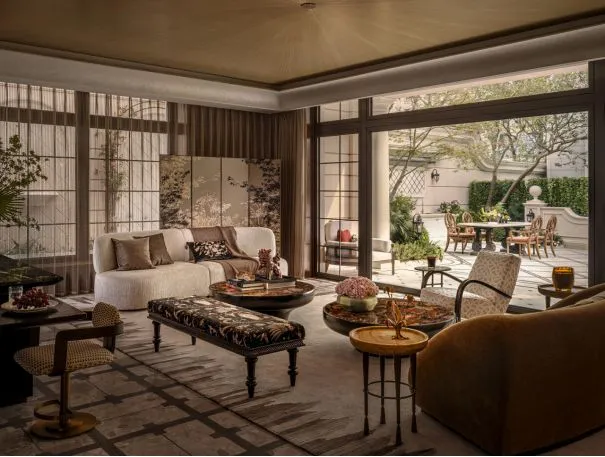
Rose Garden, Wuhan | Living space opening to the courtyard, designed by CCD
Define the Design Brief Before Choosing the Service
In luxury residential interior design, an appointment becomes easier to assess when the residential priorities are clear. Planning a home around its residents' lives means considering how rooms connect, where privacy matters, and which possessions or collections should shape the interior. The brief should also identify the existing project team, budget, and the owner's preferred involvement.
For a household that entertains frequently, the relationship between arrival, dining, and private rooms may guide the layout. An art collection may call for early discussion of viewing distances, lighting, and wall positions. These priorities provide a useful basis for deciding which disciplines should be involved and when.
What Full-Service Interior Design Means
In this guide, full-service describes a broader appointment extending from design into agreed implementation support. That support might cover purchasing coordination, responses to site queries, or final furniture placement. Each activity needs an explicit scope and a responsible party.
The term should not be read as a promise that the interior designer will undertake construction, supervise every trade, or supply every item. The proposal should explain how the designer works alongside the architect, specialists, contractor, and any project manager.
What a Design-Only Appointment Means
Design-only describes an appointment focused on producing an agreed design package. That package may include spatial layouts, material selections, furniture specifications, and detailed drawings. Its depth must be confirmed; a concept presentation and a coordinated construction drawing package serve different purposes.
Owners should establish who will take the design forward after handover, including who will obtain clarifications or review proposed substitutions. Limited follow-up can be discussed separately where the practice offers it.
Compare Deliverables and Responsibilities
The following comparison is a framework for reviewing proposals, rather than a standard service schedule. Requested services should be confirmed in writing under either appointment.
Decision area | Broader full-service appointment | Design-only appointment |
Design documentation | The proposal should list drawings and specifications at each stage. | The package should specify its detail and intended use at handover. |
Specialist coordination | The scope should define the designer's involvement through the agreed stages. | The scope should identify coordination before handover and who continues it. |
Purchasing | Owners should verify whether sourcing, ordering, and delivery coordination are included. | The proposal should name the party responsible for purchases. |
Site questions | The appointment should set the extent of reviews and responses during implementation. | Any follow-up allowance or separate appointment should be confirmed. |
Final installation | Responsibility for furniture placement and design review should be clear. | Installation and any final design checks should have named responsible parties. |
A useful test is to follow one decision through the proposal. If a selected pendant changes, who reviews its relationship to the table, updates the specification, and communicates with the relevant specialists? The answer reveals more about the working arrangement than the package name.
Match the Appointment to the Home and Its Team
Villas with Several Connected Spaces
For a villa involving new layouts, landscape connections, and bespoke interiors, the appointment should explain how the different design disciplines will work together. A broader appointment deserves consideration where the owner wants continuing design involvement as these relationships develop. An established architect and project manager may instead support a carefully defined design-only scope.
At QUINSAY MANOR (Qihu Yunzhuang), Hangzhou, CCD's basement reception room opens toward the courtyard through full-height windows. Rounded forms, stone surrounds, and the garden view contribute to its spatial character. The example invites a practical commissioning question: who will review the relationship between interior proportions, glazing, and the landscape as the project progresses?
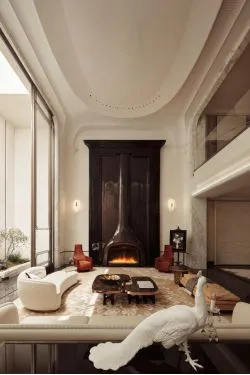
QUINSAY MANOR, Hangzhou | Courtyard-facing reception space designed by CCD
Penthouses with Bespoke Interiors
For a penthouse, the discussion may center on views, custom furniture, and the coordination of lighting with interior architecture. At SIC Mansion, panoramic glazing frames sea and city views, with greenery softening the living room's edges. The project combines interior and lighting design with artwork consulting by CCD·WOWU.
For a new residential brief, this combination suggests assessing furniture positions and art alongside the outlook from the outset. A design-only proposal can address these relationships, provided the agreed documentation and subsequent review arrangements suit the project. Continuing support should be considered where important design decisions will remain open during implementation.
Homes with an Established Delivery Team
Design-only is worth considering when the owner already has a capable team responsible for carrying out the work and wants a clearly bounded design commission. The review should focus on the team's ability to interpret the proposed documentation and its access to design clarification.
Owner involvement also matters. Someone who wishes to approve individual selections should agree a decision process; someone delegating day-to-day coordination should identify the person handling it. A broader appointment still benefits from clear approval points.
Preserve the Design Relationships That Matter
Art, Furniture, and Lighting at One Bay Park
At One Bay Park in Shenzhen, CCD brings classic and contemporary influences together through an eclectic interior. The dining room combines a metal-and-crystal chain chandelier with a glass floral installation. An antique carved wooden chair sits alongside a hand-shaped chair and burgundy velvet dining chairs. Art also occupies the hallway leading to the bedrooms, making the circulation space part of the collection's setting.
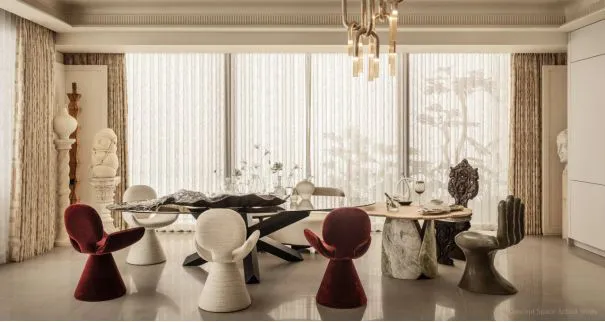
One Bay Park, Shenzhen | Dining composition designed by CCD
The commissioning lesson is to review the composition as a whole. A change to the chandelier, table, or artwork calls for a discussion of their proportions and placement together. The appointment should identify who reviews those relationships during detailed design and any later substitutions. An owner can then assess whether the proposed design package is sufficient or continuing design involvement would be useful.
Spatial Continuity and Craft at Rose Garden, Wuhan
At Rose Garden, Wuhan, the social living spaces relate to a sunken courtyard. On the ground floor, the integrated living-dining area uses antique mirrors and curved forms to extend visual depth and connect the interior with the landscape. In the master bedroom, traditional Chinese hand embroidery adds texture, while the bed and artwork establish a symmetrical axis.
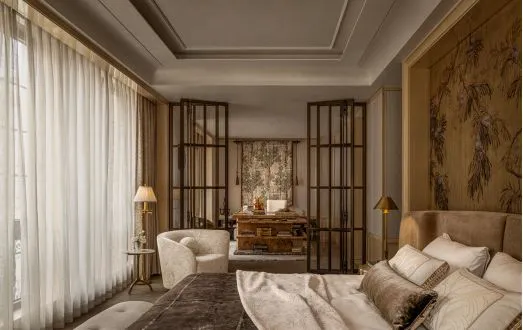
Rose Garden, Wuhan | Bedroom composition designed by CCD
These spaces offer different kinds of continuity: an outward connection to the garden and a more intimate relationship between craft, art, and furniture. For a new home, the scope discussion should address who reviews these elements together, from the room layout to the final placement of furnishings. The examples illustrate design relationships; they do not establish either project's contract model.
CCD·WOWU's artwork consulting includes curated collections and concepts for luxury properties. Where art consultancy forms part of a residential commission, its relationship to the interior design and any existing collection should be defined early.
Agree the Scope Before Work Begins
Establish the Design Handover and Review Points
Before appointment, owners should request a stage-by-stage description of deliverables and approvals. It should identify who coordinates each discipline, who responds to site questions, and who can approve changes. For design-only, the point at which responsibility passes to the implementation team deserves particular attention. A broader commission should explain how continuing involvement is organized.
Technology belongs in this discussion too. Owners considering automated shading, lighting controls, or integrated audio should ask when the relevant specialists will contribute and how their proposals will be reviewed with the interior design. This keeps the conversation focused on the intended experience of the home.
Compare Fees Against the Same Scope
Proposals should be compared against equivalent deliverables and responsibilities. Owners should establish how design fees, any purchasing services, additional reviews, and changes are charged. A lower initial fee should be assessed alongside the services the owner will still need to arrange.
The purpose is to understand the complete commission. Detailed purchasing administration can remain in the supporting schedule, while the appointment discussion stays focused on design quality, decision-making, and the continuity of the work.
Frequently Asked Questions
What Is the Main Difference Between Full-Service and Design-Only?
The working distinction is the extent of involvement beyond the design package. A broader appointment can include agreed implementation support, while design-only focuses on specified design deliverables. The written proposal determines the actual scope.
Can Design-Only Suit a Luxury Home?
Yes, it is worth considering where the design package and the team carrying it out are well matched. The decision should account for the required detail, coordination, and access to clarification.
Does Full-Service Include Construction Management?
It should not be assumed. Owners should confirm who manages construction and how that role differs from the interior designer's agreed site reviews or responses to design questions.
Are Furniture Purchasing and Installation Included?
Their inclusion depends on the agreed scope. Owners should establish who orders, coordinates delivery, installs, and reviews placement, as these activities may involve different parties.
Is Design-Only Less Expensive Overall?
The label alone cannot establish the overall cost. A comparison should cover the same scope, including the additional services and coordination that would need to be arranged separately.
When Should Art and Lighting Be Considered?
They belong in the brief and early design development discussions. Their placement and relationship to furniture and architecture should inform the design before final selections are approved.
Can Support Be Added After a Design-Only Appointment?
This should be discussed with the practice before signing. Any later support needs an agreed scope, availability, and fee basis; it is not an automatic extension.
Which Appointment Model Suits a Home in Another Region or Country?
A lead design team working with a local architect or engineering team is an arrangement worth considering. The lead team can develop the design direction, with local implementation responsibilities defined separately. Design-only may suit an established local team; continuing design support merits consideration when significant decisions will remain open during delivery.
CCD's offices include London、Melbourne、Singapore、Tokyo、Hong Kong、Shenzhen、Shanghai、Beijing、New York and Dubai, providing an international network to discuss when planning collaboration across regions. The proposal should still identify the actual team, its responsibilities, and the agreed level of site involvement for the home.
Discuss the Right Scope for Your Residence
The appropriate appointment should connect the ambitions for the home with the people responsible for realizing them. Owners considering CCD Residences, CCD's private residential business, can discuss their residential design brief, bringing the property plans, lifestyle priorities, existing team, and desired level of support to an initial conversation.