How to Choose the Right Interior Design Firm for Your Luxury Residence
Choosing an interior design firm begins with the life the residence is intended to hold. The right team needs to understand its residents, translate their priorities into a spatial proposal, and explain how it will be delivered. A compelling portfolio opens the conversation; the owner's needs give that conversation direction.
For owners comparing residential interior design firms, the decision involves relevant experience, service scope, and the people responsible for bringing architecture, furniture, art, and technology together. CCD brings three decades of development and a practice spanning international hospitality and residential design to this discussion. Its projects offer a basis for examining how a firm's design thinking could serve a particular home.

Start With the Way You Live
Give the First Conversation a Clear Purpose
A private residence design brief can begin with who will use the property, how long they expect to stay, and what they want to bring from their existing home. An art collection may need a place within the principal rooms. Visiting family may change the balance between shared and private space. Such details give a prospective designer something more specific to respond to than a preferred style.
Describe the property and the intended scope alongside the available budget and schedule. Distinguish essential requirements from ideas that remain open. The initial discussion can then reveal how the firm listens, what it asks, and where it sees decisions still to be made.
CCD's preliminary planning consulting involves working with clients, architects, management companies, and other consultants to define scope and interior design objectives. For an individual commission, the owner should establish which participants and responsibilities belong in that conversation.
Evaluate the Portfolio Beyond Aesthetics
Follow a Design Idea Through Several Rooms
When reviewing high-end residential interior design firms, select a project with a relevant scale or spatial challenge. Then follow one idea through it. How does the entrance lead into the principal room? What gives the dining area its own identity? Where does the material palette change, and what remains consistent?
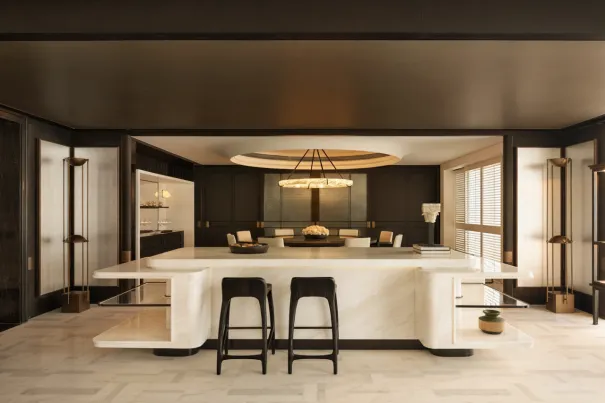
At The Bund Residence in Shanghai, the living room ceiling reinterprets the curves of Shikumen arches through contemporary craftsmanship and French molding. Circular forms return in the dining room's ceiling, table, and pendant. The connection is carried through different elements rather than confined to a decorative motif.
Dark timber and pale stone provide another thread. The dining cabinetry gives timber a stronger presence, with stone appearing as restrained accents. Read together, these choices offer a way to assess design coherence: related rooms can share a language without receiving identical treatments. The useful question for a prospective firm is how it would develop that continuity around a different household and property.
Establish What the Firm Actually Designed
A project title can encompass more than one type of space. The Sky Parlour and SIC Mansion project in Shenzhen distinguishes the clubhouse from the residence and lists their services separately. SIC Mansion includes interior and lighting design, with artwork consulting by CCD·WOWU. Its living room uses panoramic glazing to take in sea and city views, with greenery softening the edges.
WOWU is CCD's art-consultancy sub-brand, developing art collections and concepts for luxury properties, with services extending from creative development to production. Its involvement here gives the owner a specific discipline to discuss alongside interior and lighting design.
During a portfolio review, ask which spaces are shown, which disciplines the firm provided, and who on the proposed team contributed. Questions about residents' experiences require separate evidence and permission to share it.
Look for Expertise in Bespoke Residential Design
Connect Customization to a Particular Need
Bespoke residential interior design deserves a discussion about purpose. A cabinet might be developed around a collection; a dining setting around the intended number of guests. The owner can ask the designer to explain how one such requirement moves from the brief into the layout, drawings, and material choices.
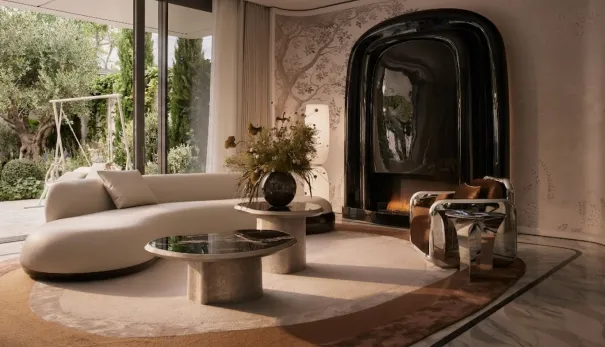
At QUINSAY MANOR in Hangzhou, a curved sofa and circular rug organize the living room around gathering. The connected living and dining spaces also bring courtyard views into the composition. This offers a different way to discuss customization: how should furniture, social space, and the setting be considered together for the proposed residence? The point is to examine the relationships a designer develops around a particular brief.
Bring Art and Technology Into the Same Discussion
An owner with an existing collection can ask how individual works would enter the design process. Would their dimensions and viewing positions be considered while the rooms are taking shape? How would furniture and lighting be reviewed around them? The answers should make clear who is responsible for art advice and who coordinates it with the interior.
Technology warrants the same attention to the whole room. Discuss the functions the household wants, then ask how controls, equipment, and maintenance access would be considered with the architecture. The appointment should identify the relevant specialists. A broad promise of customization leaves these practical relationships unexplained.
Understand the Design Process and Project Delivery
Meet the Team Behind the Proposal
The people presenting the portfolio may have different roles from those developing the drawings or attending site meetings. Establish who will lead the design, who will be the regular contact, and how the owner will take part in reviews. Ask what the firm expects from an architect or other consultants already appointed to the project.
CCD's international network includes offices in London, Melbourne, Singapore, Tokyo, Hong Kong, Shenzhen, Shanghai, and New York. Its services also include on-site technical support. For owners considering a luxury residence in Hong Kong or elsewhere in Asia, discuss how that international perspective will connect with the project's local team. Establish a regular contact, review times across time zones, and responsibility for site decisions within the appointment.
Compare the Scope Alongside the Fee
Residential interior design services should be described clearly enough to compare. A proposal can identify the design stages, drawings, consultant coordination, and site involvement included, together with the owner's approval responsibilities. Furniture purchasing or installation may need a separate discussion. Confirm what is included before drawing conclusions from the fee alone.
Ask how budget and schedule changes would be assessed and communicated. If a selected finish becomes unavailable, establish who will review the alternative and explain its effect on the surrounding design.
Consider Privacy, Discretion and Trust
Discuss the Home and Its Information Separately
Privacy within the plan concerns how the household occupies the home. A separate conversation concerns information shared during design. Plans, images, and details of collections may require agreed limits on access and circulation.
Raise these expectations before sharing sensitive material. Ask how the firm proposes to handle project information and whether photography or publication would be discussed with the owner. Any arrangements should be made explicit for the commission; a discreet visual style does not establish an information policy.
Trust also has an everyday working dimension. Some owners want to review each significant selection, while others prefer to delegate within agreed priorities. Discuss that preference early. Where references are available with the relevant client's consent, ask about communication and the handling of decisions as well as the completed rooms.
Ask the Right Questions Before Appointing a Firm
The final meeting can return to a small number of questions grounded in the proposed home. Each should invite an explanation that can be considered alongside the written proposal.
· Which completed project is most relevant to this residence, and why?
· How would the household's priorities influence the initial spatial studies?
· Who would lead the design and coordinate the other disciplines?
· How would retained art and furniture enter the process?
· Which services and reviews are included in the proposed fee?
· How would changes, approvals, and private project information be handled?
A useful answer identifies people, responsibilities, or examples. Record what remains unresolved and request clarification before appointing the firm. The aim is a shared understanding of the work and the relationship through which it will be carried out.
Why Hospitality Design Experience Matters in a Private Residence
Examine the Experience Through a Specific Project
Hospitality work gives an owner another body of design thinking to examine. Arrival, gathering, retreat, and the relationship to landscape can all be considered through a hotel project. The relevance to a home should be explained through particular spaces and decisions.
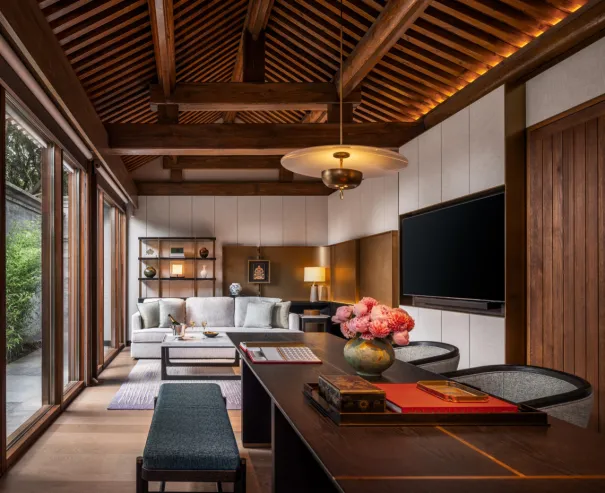
At Mandarin Oriental Qianmen, Beijing, CCD's scope includes interior and FF&E design, with artwork consulting by CCD·WOWU. The lobby arrival passes into a quadrangle courtyard with old trees. In the guestrooms, the changing courtyard landscape becomes part of the interior experience.
The hotel ranked No. 7 in The World's 50 Best Hotels 2026, recognition of the property as a whole. Its courtyard relationships offer a useful residential question: how might an arrival sequence introduce the character of a place, or a room respond to a garden over the seasons?
Keep the Household as the Measure
CCD's design philosophy brings residential qualities to hotels and hospitality qualities to residences. For an owner evaluating a luxury residential interior design company, this invites a discussion about comfort, privacy, and the experience of moving through a home. The residential brief remains the measure of what should be carried across.
Ask the team to explain how its experience would serve the household's privacy, collections, and preferred ways of gathering. The appointment should rest on that explanation, relevant work, and a clear scope. A recognized hotel portfolio is a reason to begin a conversation, with the proposed home's needs guiding the decision.
Frequently Asked Questions
How should an owner shortlist residential interior design firms?
Start with relevant project experience, scale, and service scope. Review selected work, then meet the prospective team to discuss the property, priorities, and intended budget.
What should a portfolio review establish?
The design approach and the firm's actual contribution. Ask about spatial decisions, material relationships, and the disciplines provided, distinguishing residential rooms from shared amenities.
What does bespoke residential interior design involve?
Discuss it as design developed around the particular commission. Ask which layouts, furniture, finishes, and details would be customized, and how those decisions would be reviewed together.
Does a designer need an identical project in the portfolio?
An identical project need not be the starting requirement. Look for relevant experience and ask the team to explain how it would address the differences in property, household, and scope.
What should be prepared for the first meeting?
A property description, available plans, intended schedule, and budget expectations. Include household priorities and any art or furniture to be retained, identifying matters still open for discussion.
How can design proposals be compared fairly?
Clarify their scope before comparing fees. Review the proposed team, deliverables, consultant responsibilities, and site involvement, and ask each firm to explain exclusions.
When should privacy expectations be discussed?
Before sensitive information is shared. Raise access to plans and images, confidentiality expectations, and any proposed photography or publication so the arrangements can be agreed.
Can a hospitality design firm be suitable for a private home?
Yes, where its relevant experience and proposed team address the residential brief. Examine residential work alongside hospitality projects and discuss how the approach would be adapted to the household.
Discuss a Residential Commission With CCD
Owners considering CCD can discuss the scope of a residential commission by sharing the property location, available plans, and intended schedule. Household priorities and retained collections provide a starting point for exploring the design objectives and the services the project may require.